Racing Fever: Moto
- 4.3
- Rating
- 100.00M
- Installs
- Free
- Price
 Analysis by App-foxy
Racing Fever: Moto is the kind of motorcycle game I can open for a quick burst and understand almost immediately. It puts the focus on fast road racing, sharp reactions, and the satisfying feeling of slipping through traffic without losing control. I found the first minutes easy to approach, but the game becomes more demanding once speed, traffic density, and online competition begin testing whether I can stay calm.
Developed by Gamebeam, this free racing game is available to a broad audience with an Everyone age rating. Its strong reception is reflected in a 4.3 average from around 703 thousand ratings, while more than 100 million installs show how widely it has reached. That popularity makes sense: the presentation is more serious than a simple cartoon racer, yet the controls remain approachable enough for someone who does not usually play motorcycle games.
From the first ride to a meaningful win
I’d use the first few rides to build one dependable habit rather than chase a dramatic result: scan ahead, choose a clear opening, and leave yourself room to recover after passing. That gives each attempt a purpose and makes a clean run feel earned instead of lucky. Once those choices start feeling natural, the next step is deciding whether you want to keep sharpening solo consistency or try the added pressure of a duel.
You May Also Like

 Blood Strike: 2.5 Anniversary
Blood Strike’s Loadouts Turn Every Drop Into a Tactical Gamble
A close look at Blood Strike’s custom loadouts: how fast access to signature weapons reshapes its battle royale rhythm, rewards preparation, and narrows the gap between fights.

 Pandora - Music & Podcasts
Pandora’s Music Is Easy to Start, but Harder to Recover
Pandora’s strength is its low-effort path from a seed to a station. Its weak spot is how much confidence it asks you to place in connection, setup, and quiet recovery.

 8 Ball Pool
 Is Built on Rivalries, Rematches, and Routine
A close look at the rivalries, rematches, shared routines, and unanswered safety questions that turn a quick pool match into a persistent mobile community.

 Samsung Music
’s Quiet Strength Is Playing What You Already Own
Its reach comes less from spectacle than from dependable access to a personal library. That simplicity is both the app’s strongest retention engine and its ceiling.

 AccuWeather: Weather Radar
AccuWeather Review: A Quick, Clear Forecast for Everyday Decisions
For everyday plans, the best forecast is the one you can understand quickly. AccuWeather makes rain timing, radar, and local conditions easy to act on, with a few trade-offs.

 Hill Climb Racing
Why Hill Climb Racing Still Turns Crashes Into One More Run
A tiny car, a bumpy hill and one more upgrade: Hill Climb Racing keeps resurfacing because its simple chaos makes every near-miss feel personal.
More From Our News Desk



What the first session feels like
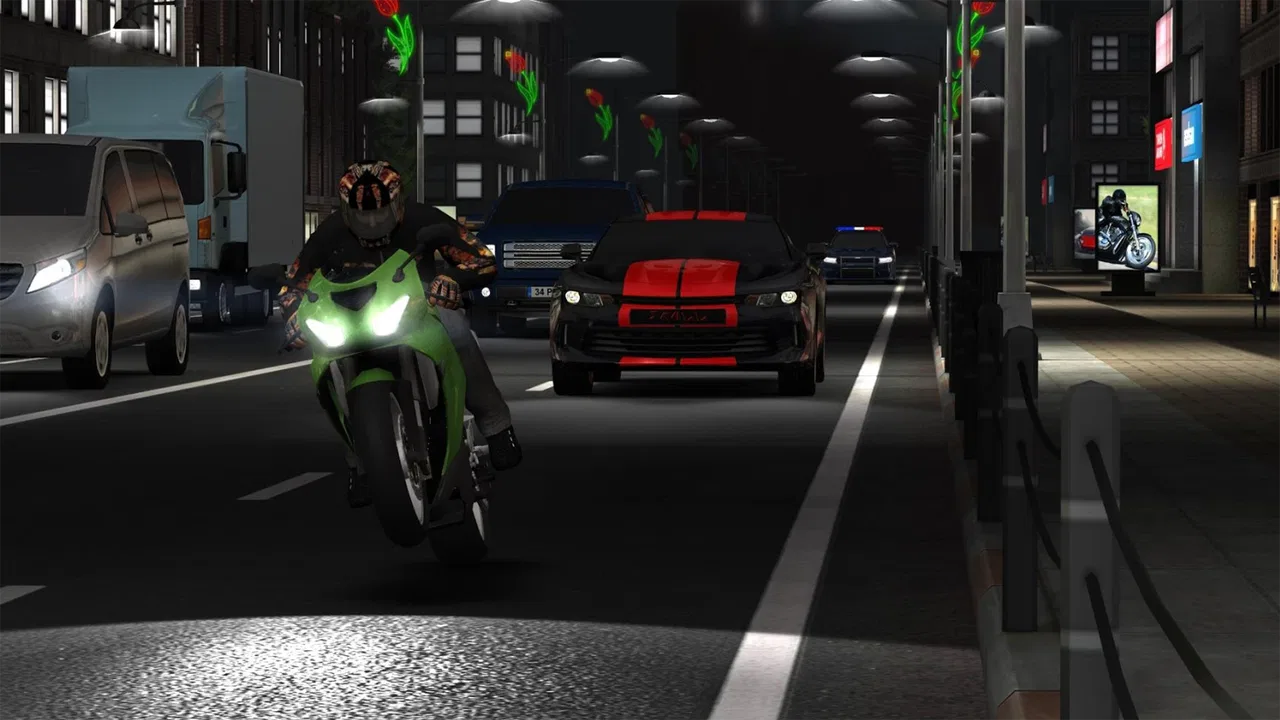
My first impression was that Racing Fever: Moto wants me to concentrate on the road rather than learn a complicated control system. The motorcycle moves quickly, vehicles create immediate hazards, and every successful pass gives the run a little more momentum. The realistic visual style helps me judge distance, but it also means mistakes feel more obvious. A gap that looks safe at speed can disappear before I have time to correct it.
The best way to approach the opening session is not to chase a perfect score immediately. I recommend treating the first few runs as practice for reading traffic. Watch how quickly vehicles close in, learn how far the motorcycle moves when you steer, and resist the urge to make several rapid corrections. Smooth movement is more useful than dramatic swerving, especially when two lanes appear blocked.
This is also where the game differs from many casual racing alternatives. It does not feel built only around collecting a boost and reaching the finish line. The central pleasure comes from making small decisions repeatedly: move now or wait, pass on one side or change position, take a risk or preserve the run. That gives short sessions a surprisingly focused rhythm.
Setting up without overthinking it
The game is free to install, and the current version is 2.2.3. It supports devices running Android 7.1 or later, so many older Android users can try it without needing a recent phone. I would still begin with a stable connection when first opening it, particularly if I plan to explore online duels rather than stay with solo riding.
I suggest starting with the default control arrangement instead of changing everything before the first ride. A new player needs to understand the motorcycle’s response before deciding that the controls are the problem. After a few attempts, adjust only one thing at a time. If steering feels too sensitive, make a small change and test it again; changing several settings together makes it difficult to know what actually improved the ride.
One practical detail is worth keeping in mind: a motorcycle game can feel very different depending on how I hold the phone. I get better results when my thumbs are not covering too much of the screen and when I keep a firm grip that does not shift during a turn. This sounds minor, but inconsistent hand position can make a controllable bike seem unpredictable.
How to reach the first real success
For a first meaningful success, I would define the goal as completing a clean run with deliberate passes, not simply surviving through luck. Begin by staying in a predictable lane and look for one clear opening at a time. When a vehicle is close, avoid moving across more space than necessary. The safest pass is usually the one that leaves room to recover if another vehicle appears ahead.
I found that looking slightly farther down the road helps more than staring at the motorcycle itself. The nearby traffic still needs attention, but distant vehicles reveal whether a lane is about to close. This habit turns the game from a sequence of sudden reactions into a simple planning exercise. I can prepare for the next opening instead of panicking when it arrives.
Do not judge a run only by its ending. A failed attempt can still show whether the problem was late steering, overconfidence, or poor lane choice. If I crash after a risky pass, I try the same section again with a slower decision. That small change often teaches more than starting another run without thinking about what went wrong.
Online duels add another reason to practice first. Racing against another player is more exciting when I already understand the basic movement and traffic patterns. Going online immediately can make an ordinary control mistake feel like a competitive defeat. I prefer to build a little consistency in solo play, then use duels as a test of decision-making under pressure.
The confusion points new players often meet
The biggest early misunderstanding is assuming that speed alone is the objective. Fast riding is important, but reckless movement usually ends a run sooner than it improves it. The game rewards awareness because traffic can punish a pass that looked attractive a moment earlier. I get better results when I treat speed as something to manage rather than something to maximize at every second.
Another source of confusion is the difference between visual realism and physical certainty. The graphics make the road and vehicles easy to recognize, but a realistic-looking scene does not mean every gap should be treated as safe. Camera perspective can make distance difficult to estimate, especially when several vehicles overlap. When I am unsure, waiting briefly is often the better choice.
New players may also wonder whether in-app purchases are necessary. The game is free, but optional purchases range from $0.99 to $109.99 per item. I would not spend anything during the first session. The useful question is whether a purchase solves a problem I understand, rather than whether it promises a quicker route through early progress. Anyone uncomfortable with optional spending should decide on a personal limit before playing, particularly because racing games make upgrades and retries feel tempting after a frustrating crash.
The Everyone rating makes the game broadly accessible, but that does not mean every player will enjoy its pressure. Younger players may appreciate the simple premise, while people who dislike repeated near-misses could find the traffic demanding. The age rating describes accessibility, not whether the pace suits a particular temperament.
Where the game fits among motorcycle racers
Compared with an arcade racer built around exaggerated jumps, bright power-ups, or constant spectacle, Racing Fever: Moto feels more grounded. Its appeal comes from road awareness and close passes rather than a large collection of unrelated gimmicks. I prefer that approach when I want a focused driving challenge that I can understand in a few minutes.
On the other hand, someone looking for deep vehicle simulation may find it too immediate. The game is designed to get me riding quickly, not to turn every mechanical detail into a separate system to manage. A dedicated simulation-style alternative may be better for players who want extensive tuning, technical track strategy, or a slower learning curve.
It also occupies a different space from purely asynchronous racing games. The online duels give the experience a more direct competitive edge, but I would choose them when I am ready to react under pressure rather than when I want a relaxed background activity. For commuting breaks or short waits, solo runs are easier to control. For a longer session with a competitive mood, duels make more sense.
Small techniques that improve consistency
My first useful technique is to create a mental hierarchy of hazards. A vehicle immediately beside me deserves attention first, a vehicle ahead determines the next move, and distant traffic tells me what may happen afterward. Following that order prevents me from reacting to every object at once. It is especially helpful when several lanes appear busy.
The second is to avoid steering back and forth after a pass. Once I have cleared a vehicle, I give the motorcycle a moment to settle before choosing the next line. Repeated corrections can turn a successful overtake into a collision with the next obstacle. This is a small habit, but it makes the ride look and feel much more controlled.
The third is to use short sessions as targeted practice. One run can focus on judging gaps, another on staying calm at higher speed, and another on preparing for online competition. This is more effective than playing aimlessly until a lucky run appears. It also makes the game a better fit for a daily routine: I can improve one skill during a brief break without needing a long uninterrupted session.
A fourth trade-off concerns risk. Close passes may feel rewarding and can make a run more exciting, but they reduce the room available for recovery. I take them when the road ahead is clear, not simply because the current opening exists. This distinction helped me avoid treating every possible pass as an obligation.
Who will enjoy it, and who should skip it
I would recommend Racing Fever: Moto to someone who wants a motorcycle game that is quick to learn, visually convincing, and centered on traffic decisions. It works particularly well for players who enjoy improving through repetition. A short failed run still gives useful feedback, and the next attempt begins quickly enough that I rarely feel stuck in a long setup process.
It is also a good choice for a player who wants a bridge between casual racing and online competition. The basic riding is approachable, while duels provide a reason to refine timing and control. The game can serve as a quick solo distraction or a more focused challenge when I want to test myself against another rider.
I would skip it if my priority is a large career mode, highly technical motorcycle customization, or a calm scenic ride. The traffic pressure is central to the experience, so anyone who finds repeated near-collisions stressful may prefer a gentler racing game. I would also be cautious if optional purchases are a major concern; although the game is free, the listed purchase range reaches from small amounts to $109.99 per item, so spending boundaries matter.
What to expect after the first few rides
Once the basic movement feels natural, the next step is to stop measuring progress only by distance. Pay attention to how early I recognize a blocked lane, how often I recover after a mistake, and whether my decisions remain steady when the road becomes busier. Those are better signs of improvement than one unusually successful attempt.
The online duel option is most enjoyable when used as a deliberate next step rather than a substitute for learning. I would enter after I can complete several solo runs without constantly fighting the controls. In a duel, the pressure comes from knowing that another rider is involved, so uncertainty has a larger cost. Familiarity with the road view lets me focus on competition instead of basic steering.
It is also sensible to check the version shown on the device before troubleshooting. The current version is 2.2.3, and Android compatibility begins at version 7.1. If the game feels unstable, I would first confirm that the phone meets that requirement and that the installation is current before blaming my control technique. That simple check avoids wasting time adjusting settings for a problem that may be unrelated to riding.
My recommendation after spending time with it
Racing Fever: Moto succeeds because it understands the appeal of a motorcycle weaving through traffic: the rules are simple, but the decisions are not. I enjoy the way a clean pass can feel earned without requiring a lengthy tutorial. The realistic presentation gives each mistake weight, while the short-session structure keeps the game easy to return to.
Its limitations are equally clear. Players seeking a broad simulation, a relaxed pace, or a completely purchase-free environment may be happier elsewhere. The road can become demanding, and online play is better after some practice. Still, for a free racing game with a 4.3 average and more than 100 million installs, it offers a convincing reason to keep trying: every crash points to a specific decision I can improve.
My advice is to install it, leave purchases alone at first, and aim for one clean, controlled run before chasing speed. If that simple loop feels satisfying, the game has enough tension to keep motorcycle racing interesting well beyond the first session.
FAQs for Racing Fever: Moto
01What is Racing Fever: Moto?
Racing Fever: Moto is a high-speed motorcycle racing game available for both Android and iOS devices. It offers a thrilling experience with realistic graphics, multiple modes, and a variety of bikes to choose from. Players can enjoy solo races or compete against others in multiplayer mode.
02What are the main features of Racing Fever: Moto?
The game features four different camera angles, 16 different motorcycles to choose from, and real-time multiplayer races. It also includes various game modes like Escape Mode and Daily Bonus Mode, providing a range of challenges and experiences for players seeking dynamic gameplay.
03Is Racing Fever: Moto suitable for all ages?
Racing Fever: Moto is designed to be enjoyed by players of various ages, but due to its racing and competitive nature, it might be more suitable for older children and adults. It’s always advisable for parents to review the game content to ensure it aligns with their standards for younger players.
04Does Racing Fever: Moto require an internet connection?
While Racing Fever: Moto can be enjoyed offline in solo mode, an internet connection is required for multiplayer races and to access certain features like leaderboards and in-game purchases. This connectivity enhances the competitive aspect by allowing players to race against others globally.
05Are there in-app purchases in Racing Fever: Moto?
Yes, Racing Fever: Moto includes in-app purchases. Players can buy in-game currency to unlock new bikes, skins, and other features. While purchases can enhance the gaming experience, they are not necessary to enjoy the core gameplay, as the game offers plenty of content without spending money.
Pros
- Stunning graphics and realistic environments.
- Wide variety of motorcycles to choose from.
- Multiple game modes for diverse gameplay.
- Smooth and responsive controls.
- Regular updates enhancing features.
Cons
- In-app purchases can be pricey.
- Advertisements can be intrusive.
- Requires a stable internet connection.
- Limited customization options for bikes.
- Can be repetitive over time.

Racing Fever: Moto
Gallery